IP TELEPHONY TECHNOLOGY
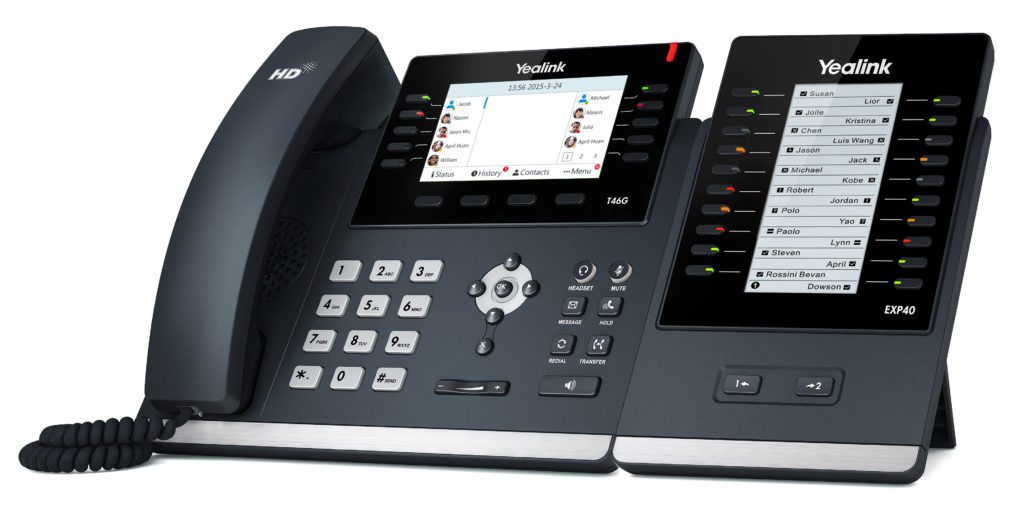
Yealink IP Phones
Enterprise SIP endpoints designed for professional business communication, hosted PBX platforms, SIP Trunk services, corporate networks and large-scale IP telephony deployments.
Yealink combines SIP-based communication with enterprise networking, automated provisioning, centralized configuration and a broad range of endpoint hardware.
TECHNOLOGY OVERVIEW
Why Yealink?
Yealink has established a strong position in business IP telephony by combining standards-based SIP communication with practical endpoint management and enterprise network integration.
The platform is suitable for organizations that require predictable SIP behavior, centralized deployment and compatibility with IP-PBX, Cloud PBX and SIP Trunk infrastructure.
SIP Compatibility
Standards-based SIP operation allows Yealink endpoints to integrate with a wide range of PBX and hosted telephony platforms.
Auto Provisioning
Yealink supports automated configuration mechanisms that significantly reduce manual endpoint deployment.
Enterprise Networking
VLAN, QoS, LLDP, Ethernet and PoE capabilities allow the phone to operate as a managed endpoint inside a corporate network.
Broad Product Range
Yealink offers endpoints ranging from entry-level SIP phones to advanced executive and specialized business devices.
Deployment Efficiency
Automated provisioning and configuration profiles make the platform suitable for installations containing many endpoints.
Professional Audio
Business-oriented models provide advanced audio processing features designed for professional voice communication.
SIP TECHNOLOGY
SIP on Yealink Endpoints
Yealink IP phones operate as SIP User Agents and use SIP signaling to establish and control voice sessions.
SIP Accounts
Supported models can provide multiple independent SIP accounts, allowing a single endpoint to handle several identities or services.
SIP Registrar
The phone registers its SIP identity with the registrar provided by the PBX or telephony service.
SIP Proxy
SIP signaling can be routed through a proxy or directly toward the configured telephony platform, depending on the architecture.
SIP Transport
Depending on the model and deployment, SIP signaling can operate using UDP, TCP or encrypted TLS transport.
RTP / RTCP
Real-time voice media is carried using RTP, while RTCP can provide control and media-quality information.
DTMF
DTMF signaling supports IVR, feature codes, automated attendants and other interactive telephony services.
DEVICE PROVISIONING
Yealink Auto Provisioning
Automated provisioning is one of the most important features when deploying IP telephones at scale.
Instead of configuring each device manually, a provisioning server can provide the required configuration automatically after the device connects to the network.
HTTP / HTTPS
Configuration files can be delivered through HTTP or HTTPS provisioning infrastructure.
TFTP
TFTP can be used in controlled provisioning environments where legacy deployment mechanisms are required.
DHCP
DHCP can be used to provide network parameters and provisioning information during endpoint startup.
Configuration Templates
Standardized configuration templates allow common settings to be deployed across multiple endpoints.
MAC-Based Provisioning
Device-specific configuration can be associated with the endpoint identity and applied automatically.
Mass Deployment
Automated provisioning dramatically reduces installation time when deploying dozens or hundreds of telephones.
NETWORK INFRASTRUCTURE
Yealink Network Architecture
Yealink endpoints are designed to operate inside managed Ethernet networks where addressing, segmentation and traffic prioritization can be centrally controlled.
Ethernet
Many Yealink business phones provide dual Ethernet ports, allowing a workstation to share the physical network connection through the phone.
Gigabit Ethernet
Gigabit-capable models provide sufficient bandwidth for modern desktop environments without creating an Ethernet bottleneck.
Power over Ethernet
PoE-capable models can receive electrical power directly from the managed Ethernet switch.
IPv4 / IPv6
Supported models can operate in modern IP networks using IPv4 and, where supported, IPv6.
DHCP
DHCP simplifies endpoint installation by automatically providing IP configuration.
DNS / NTP
DNS provides service discovery and hostname resolution, while NTP maintains accurate endpoint time synchronization.
NETWORK SEGMENTATION
Voice VLAN and LLDP
Enterprise IP telephony should normally use network segmentation to separate voice traffic from ordinary workstation traffic.
Voice VLAN
A dedicated VLAN allows voice endpoints to be logically isolated from user data traffic.
802.1Q
VLAN tagging provides Layer-2 traffic separation between voice and data networks.
LLDP
LLDP allows compatible network infrastructure and endpoints to exchange topology and device information.
LLDP-MED
LLDP-MED can be used in enterprise voice deployments to assist with voice network discovery and endpoint policy assignment.
Network Isolation
Voice VLANs can be combined with ACLs and firewall policies to restrict unnecessary communication between voice and data networks.
Centralized Policy
Managed switching infrastructure allows the administrator to apply consistent voice-network policies across multiple locations.
VOICE QUALITY
QoS for Yealink Voice Traffic
Voice communication is sensitive to packet loss, jitter and latency. Network engineering therefore plays a critical role in the quality of SIP communication.
DSCP
IP-layer QoS markings allow network equipment to classify and prioritize real-time voice packets.
802.1p
Layer-2 priority information can be used by compatible switches to prioritize voice traffic.
RTP Prioritization
RTP media should receive appropriate priority through the complete network path.
Low Latency
Excessive latency can create conversational delay and reduce the usability of interactive voice communication.
Jitter Control
Variable packet arrival times can degrade voice quality and should be controlled through proper network design.
Packet Loss
Voice traffic should be protected from congestion and unnecessary packet loss.
SIP SECURITY
Security and Encryption
SIP endpoints should never be treated as trusted devices simply because they are located inside the office network.
SIP over TLS
TLS can protect SIP signaling between the endpoint and the telephony infrastructure.
SRTP
Secure RTP can protect the voice media stream against unauthorized interception.
HTTPS
HTTPS should be preferred for secure remote provisioning and management wherever supported.
Authentication
SIP authentication prevents unauthorized endpoints from registering with the service.
Firmware Management
Firmware should be maintained according to the vendor's supported lifecycle and security recommendations.
Firewall Policy
SIP and RTP access should be restricted to the required communication infrastructure.
VOICE ENGINE
Professional Audio
Yealink business phones are designed around the requirements of interactive real-time voice communication.
HD Voice
Wideband codecs and appropriate audio processing can provide improved speech intelligibility compared with narrowband telephony.
Echo Cancellation
Acoustic echo cancellation reduces unwanted feedback during hands-free and speakerphone operation.
Noise Reduction
Audio processing can reduce environmental noise and improve speech intelligibility.
Codec Selection
Codec selection should consider audio quality, bandwidth usage, interoperability and available processing resources.
Headsets
Business-oriented models can support professional headset deployments depending on the hardware configuration.
EHS
Selected models support electronic hook switch integration for professional wireless headset environments.
DEPLOYMENT
Typical Yealink Deployment
A properly engineered Yealink deployment combines endpoint configuration with network infrastructure and the SIP service layer.
1. Access Switch
The Yealink endpoint connects to the managed Ethernet access layer.
2. PoE
Where supported, the switch supplies electrical power directly through Ethernet.
3. Voice VLAN
The phone is assigned to the designated voice network.
4. DHCP
The endpoint receives its network configuration automatically.
5. Provisioning Server
The required configuration profile is downloaded automatically.
6. SIP Registration
The endpoint registers with the IP-PBX, SBC or hosted SIP platform.
USE CASES
Where Yealink Fits Best
Corporate Offices
Professional SIP endpoints for employees, managers, reception desks and meeting areas.
Call Centers
Suitable endpoints for agent workstations and professional headset-based communication.
Cloud PBX
Yealink phones can operate as SIP endpoints for hosted PBX and cloud communication services.
SIP Trunk
Business phones can register against an IP-PBX connected to a SIP Trunk service.
Multi-Site Organizations
Automated provisioning makes standardized deployment practical across geographically distributed offices.
Service Providers
Provisioning capabilities are useful for providers managing large numbers of customer endpoints.
SERVICENET ENGINEERING
Recommended Yealink Architecture
For business deployments, ServiceNet recommends combining Yealink endpoints with a managed Ethernet infrastructure, dedicated voice segmentation, QoS and controlled SIP access.
Managed PoE Switch
Provides centralized Ethernet connectivity and endpoint power.
Dedicated Voice VLAN
Separates IP telephony traffic from ordinary user traffic.
QoS
Provides predictable treatment of RTP traffic during periods of network congestion.
Provisioning
Automates endpoint configuration and reduces deployment errors.
SIP Security
Use TLS, SRTP, authentication and appropriate firewall policy where supported by the service.
Monitoring
Monitor registration state, network connectivity and service availability.
VOIP.GE KNOWLEDGE BASE
Yealink in Professional IP Telephony
Yealink is a strong choice for organizations that require reliable SIP endpoints combined with efficient provisioning and enterprise network integration.
The platform becomes particularly effective when deployed together with managed switching, Voice VLAN, QoS, PoE, automated provisioning and secure SIP infrastructure.
ServiceNet can assist with Yealink endpoint selection, SIP configuration, provisioning, network integration and deployment as part of a complete IP telephony solution.
For technical consultation, use the contact options available on our website or call our hotline:
+995 322 485000
24/7 Technical Support