ENTERPRISE VOICE ARCHITECTURE
Cisco IP Telephony
Enterprise-grade voice infrastructure built around Cisco IP Phones, Cisco IOS / IOS XE voice gateways, Unified Communications Manager, SIP, SCCP and carrier-grade survivability mechanisms.
Cisco is not simply an IP phone vendor. It provides an integrated communications architecture in which the endpoint, switching infrastructure, routing, call-control platform, voice gateway, security and quality-of-service mechanisms operate as a unified system.
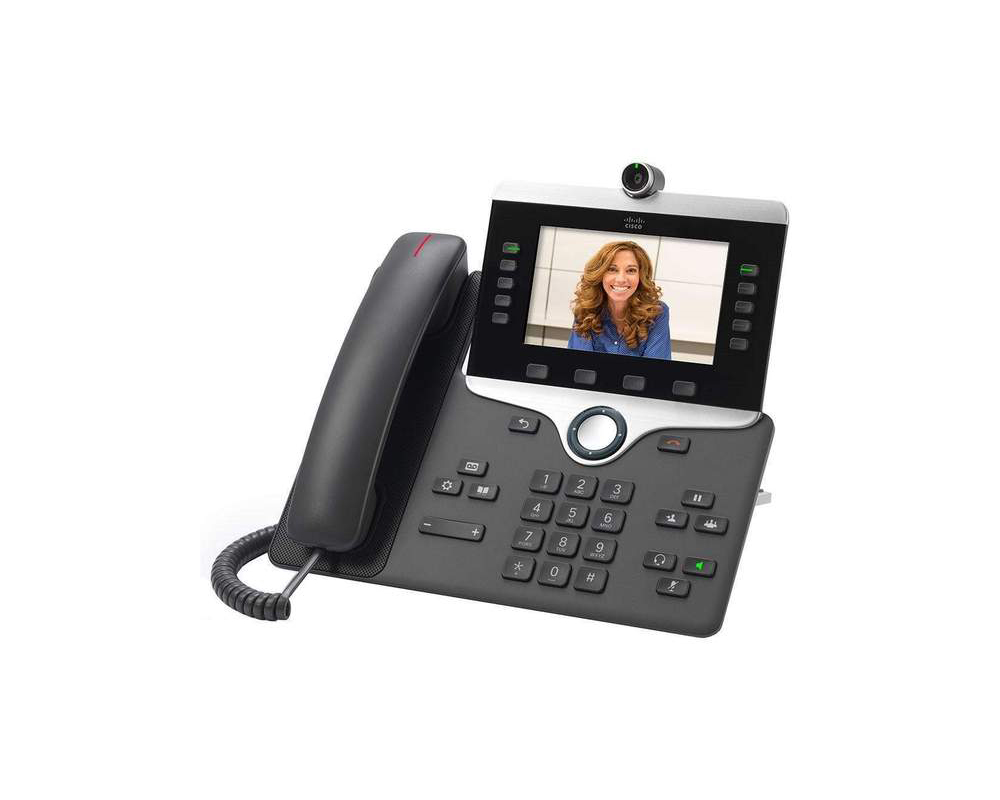
ARCHITECTURE
Cisco Voice Architecture
A properly engineered Cisco voice network separates endpoint access, call control, media processing, PSTN/SIP interconnection and network transport into clearly defined functional layers.
IP Phones
Cisco IP Phones operate as voice endpoints and communicate with the configured call-control infrastructure using supported signaling protocols.
Cisco Unified CM
Cisco Unified Communications Manager provides centralized call control, endpoint registration, dial plan, device pools, calling features and enterprise telephony services.
Cisco CME
Cisco Unified Communications Manager Express provides integrated call processing on supported Cisco IOS / IOS XE voice gateway platforms.
Cisco SRST
Survivable Remote Site Telephony provides local call-processing capabilities when a remote office loses connectivity to centralized call control.
Cisco CUBE
Cisco Unified Border Element provides SIP demarcation, interworking and policy control between enterprise voice infrastructure and external SIP networks.
Voice Gateway
Cisco voice gateways provide connectivity between IP telephony, PSTN, SIP trunks and traditional telephony interfaces.
CALL CONTROL
Cisco Unified Communications Manager
Cisco Unified Communications Manager provides centralized call control for enterprise IP telephony environments. It maintains endpoint registration, directory numbers, device configuration, calling permissions and dial-plan logic.
Device Pools
Device Pools allow common configuration parameters such as region, SRST reference, date/time settings and media resources to be assigned consistently.
Directory Numbers
Directory Numbers define logical telephone identities and can be associated with physical or software endpoints.
Calling Search Spaces
CSS and partitions implement logical call-routing authorization and prevent unauthorized access to defined dial-plan destinations.
Route Patterns
Route Patterns provide pattern-based call routing toward gateways, trunks or route lists.
Route Lists
Route Lists provide ordered routing toward one or more route groups and allow controlled path selection.
Media Resources
Conference bridges, music-on-hold, media termination and transcoding resources can be integrated into the call-control architecture.
SIGNALING
SIP and SCCP
Cisco environments historically supported SCCP as a Cisco-specific endpoint control protocol, while modern deployments commonly use standards-based SIP.
SIP
Session Initiation Protocol provides standards-based signaling for session establishment, modification and termination.
SCCP
Skinny Client Control Protocol is a Cisco-developed signaling protocol historically used extensively for Cisco IP Phone deployments.
SIP Interoperability
SIP provides a more open integration model for connecting Cisco voice infrastructure with third-party PBX, SBC and carrier platforms.
Protocol Selection
Protocol selection should be based on endpoint firmware, call-control platform, required features and interoperability requirements.
HIGH AVAILABILITY
Cisco Unified SRST
Survivable Remote Site Telephony is one of the most important Cisco voice technologies for distributed enterprise networks.
A remote branch can continue providing local telephony services when the WAN connection to the centralized call-control platform becomes unavailable.
WAN Failure
Loss of connectivity to centralized call control can trigger fallback toward the local SRST gateway.
Local Registration
The SRST gateway can provide local registration and basic call-handling functionality during fallback.
Local Calling
Branch users can continue making supported local calls without dependence on the remote call-control server.
PSTN Survivability
When appropriate voice interfaces or SIP connectivity are available, the gateway can maintain external calling during WAN failure.
SIP SRST
Cisco Unified SIP SRST can provide backup registrar and call-handling functions for SIP endpoints.
Secure SRST
Secure deployments can use certificate authentication, TLS signaling and SRTP media encryption.
SIP SURVIVABILITY
SIP SRST and B2BUA
Cisco Unified SIP SRST can provide local SIP registrar and call-handling services when a remote SIP endpoint loses access to its primary call-control infrastructure.
SIP Registrar
The Cisco gateway can act as a local registrar for SIP endpoints during survivability operation.
SIP Proxy
SIP signaling can be handled locally to maintain communication across the available voice infrastructure.
B2BUA
Back-to-Back User Agent functionality provides independent SIP dialogs on each side of the gateway.
SIP to PSTN
SIP endpoints can be connected to external voice services through appropriate gateway configuration.
SIP BORDER CONTROL
Cisco CUBE
Cisco Unified Border Element is designed to provide controlled SIP interconnection between enterprise voice networks and external SIP providers.
SIP Demarcation
CUBE establishes a controlled administrative boundary between internal and external SIP domains.
Dial-Peers
Cisco IOS dial-peers define call routing behavior and determine how matching destinations are processed.
SIP Normalization
SIP headers, routing information and signaling behavior can be adapted between incompatible environments.
Topology Hiding
SIP boundary control can prevent unnecessary exposure of internal addressing and topology information.
Codec Negotiation
Codec policies can be controlled between internal endpoints and external SIP trunks.
SIP Security
Authentication, access control, TLS and SRTP can be incorporated into the SIP edge architecture where supported.
CISCO IOS VOICE
Dial-Peers
Dial-peers are one of the fundamental building blocks of Cisco IOS voice routing. They define how Cisco devices identify and process call destinations.
Destination Pattern
The destination-pattern determines which dialed numbers are matched by an outbound POTS or VoIP dial-peer.
Voice Class
Voice classes allow reusable policies for SIP signaling, codecs, DTMF, RTP and other call parameters.
Session Target
The session target identifies the remote signaling destination for VoIP call routing.
POTS Dial-Peer
POTS dial-peers are used for traditional voice interfaces such as analog or digital telephony connections.
VoIP Dial-Peer
VoIP dial-peers define routing toward SIP, H.323 or other IP voice destinations depending on platform and configuration.
Preference
Multiple routing paths can be engineered using preference and fallback mechanisms.
MEDIA ENGINEERING
Codec Architecture
Codec selection directly affects bandwidth, packet rate, CPU/DSP utilization and interoperability between voice domains.
G.711
High-quality PCM voice with relatively high bandwidth consumption and excellent interoperability.
G.729
Compressed voice codec historically used to reduce bandwidth requirements on constrained WAN links.
G.722
Wideband codec suitable for high-quality voice communication where supported end-to-end.
Codec Negotiation
SIP and voice gateways negotiate compatible codecs according to endpoint and dial-peer policy.
Transcoding
DSP-based transcoding can bridge otherwise incompatible codec domains.
Packetization
RTP packetization interval influences packet rate, overhead, latency and overall bandwidth consumption.
MEDIA PROCESSING
DSP and Media Resources
Cisco voice gateways can use dedicated Digital Signal Processor resources for media-processing operations that cannot always be performed transparently by endpoints.
Transcoding
Converts media between incompatible codec formats when two call legs cannot negotiate a common codec.
Conferencing
DSP resources can provide hardware media conferencing capabilities on supported platforms.
MTP
Media Termination Point can assist with media anchoring and certain SIP interoperability scenarios.
Voice Quality
Proper DSP resource allocation is important when designing high-density voice gateway deployments.
VOICE NETWORK
Cisco Voice Networking
Cisco's major advantage is the ability to engineer the entire voice transport network together with the telephony platform.
Voice VLAN
IP phones can be logically separated from workstation traffic using a dedicated voice VLAN.
CDP
Cisco Discovery Protocol can provide endpoint discovery and voice-network integration within Cisco environments.
LLDP-MED
LLDP-MED provides standards-based endpoint discovery and network policy exchange for supported voice devices.
PoE
Cisco switches can provide centralized electrical power to compatible IP endpoints over Ethernet.
DHCP
DHCP can provide addressing and additional voice-specific parameters required during endpoint initialization.
TFTP
Cisco IP Phone deployments may use TFTP infrastructure for retrieval of configuration and firmware-related resources.
PHONE PROVISIONING
DHCP and TFTP Provisioning
Cisco IP Phone initialization is closely integrated with the network services layer. DHCP, TFTP and call-control infrastructure work together during endpoint boot and registration.
DHCP Addressing
The phone obtains its IP configuration from DHCP or a manually configured network profile.
Option 150
Cisco deployments commonly use DHCP Option 150 to provide the TFTP server address to Cisco IP Phones.
TFTP
The endpoint retrieves the required configuration resources from the designated TFTP infrastructure.
Call Manager Discovery
The downloaded configuration provides information required for registration with the configured call-control infrastructure.
QUALITY OF SERVICE
Enterprise Voice QoS
Voice traffic is extremely sensitive to delay, jitter and packet loss. Cisco provides a comprehensive QoS framework that allows voice traffic to be classified, marked, queued and prioritized throughout the network.
DSCP EF
Expedited Forwarding is commonly associated with real-time RTP voice traffic in enterprise QoS designs.
Trust Boundary
QoS trust should be explicitly established at the appropriate network boundary rather than blindly trusting endpoint markings.
Priority Queue
Low-latency queuing can provide deterministic treatment for latency-sensitive real-time traffic.
Policing
Traffic policing can protect the network from excessive or incorrectly marked traffic entering the priority class.
WAN QoS
WAN links require careful queue engineering because congestion can directly degrade voice quality.
Jitter and Loss
Voice engineering must control one-way delay, variation in packet arrival and packet loss across the entire media path.
VOICE SECURITY
Secure Cisco Voice
Enterprise voice security must protect signaling, media, endpoint identity, provisioning infrastructure and the SIP boundary.
TLS
TLS can provide encryption and authentication for SIP signaling in supported deployments.
SRTP
Secure RTP protects voice media against unauthorized interception and provides integrity protection.
Certificates
PKI and certificates can establish cryptographic trust between voice components.
Secure SRST
Cisco Secure SRST can maintain authenticated and encrypted voice operation during fallback conditions.
ACL
Infrastructure ACLs should restrict SIP, RTP and management access to authorized networks and systems.
Toll Fraud Protection
Dial-plan restrictions, class of service and controlled PSTN access are essential to prevent unauthorized outbound calling.
SIP SECURITY MODEL
TLS, SRTP and PKI
A secure Cisco voice architecture should distinguish between signaling security and media security.
SIP / TLS
Protects SIP signaling against passive interception and provides certificate-based endpoint or peer authentication where configured.
SRTP
Encrypts RTP media and provides integrity protection for supported call flows.
CA Infrastructure
Certificate authorities establish the trust model required for authenticated secure voice components.
Trustpoints
Cisco IOS trustpoints bind local certificate configuration to the required PKI trust hierarchy.
CALL FLOW
Cisco SIP Call Processing
A typical enterprise SIP call can traverse multiple logical domains before the media reaches the remote endpoint.
Endpoint
The Cisco IP Phone generates SIP signaling according to its configured call-control profile.
Call Control
CUCM or another SIP call-control system determines the destination and routing policy.
SIP Trunk
The call may leave the enterprise through a SIP trunk toward an external provider.
CUBE
CUBE can provide SIP normalization, routing, security and inter-domain policy enforcement.
Carrier
The external SIP provider terminates the enterprise call toward the destination network.
RTP Media
The actual voice stream is carried independently from SIP signaling, subject to the negotiated media path.
ENGINEERING
Cisco Voice Troubleshooting
Troubleshooting Cisco voice systems requires correlation of endpoint state, signaling, routing, media and network behavior rather than testing only the telephone itself.
show cdp neighbors
Verifies Layer-2 Cisco discovery relationships and helps identify connected infrastructure.
show interfaces
Used to inspect interface status, errors, counters and physical-layer behavior.
show vlan
Helps verify VLAN membership and Layer-2 segmentation.
show dial-peer voice summary
Provides a concise view of configured Cisco voice dial-peers.
show voice call status
Provides information about active voice calls on supported Cisco voice gateways.
SIP Debugging
SIP signaling analysis can reveal registration failures, routing problems, authentication errors, codec negotiation issues and unexpected SIP responses.
NETWORK ENGINEERING
Designing a Cisco Voice Network
Cisco voice deployments should be engineered as an end-to-end system. A technically correct IP Phone configuration cannot compensate for an incorrectly designed network.
Access Layer
PoE, voice VLAN, QoS trust boundary, CDP/LLDP and endpoint access policies.
Distribution / Core
Routing, QoS propagation, redundancy and controlled reachability between voice network segments.
Call Control
CUCM, CME or another SIP control platform responsible for endpoint registration and call routing.
Voice Edge
CUBE, SIP trunks, PSTN gateways and security boundaries connecting the enterprise to external networks.
Survivability
SRST or equivalent local call-control mechanisms for remote offices and critical locations.
Monitoring
SNMP, syslog, CDR/CMR, interface statistics and packet-level analysis provide operational visibility.
SERVICENET ENGINEERING
Cisco Voice Solutions by ServiceNet
ServiceNet can design and integrate Cisco voice infrastructure into existing IP networks, SIP services and enterprise communication environments.
Cisco IP Phones
Endpoint deployment, firmware, provisioning and registration.
Cisco IOS Voice
Voice gateways, dial-peers, SIP routing and PSTN integration.
SIP Trunk
Integration of Cisco infrastructure with carrier SIP services.
CUBE
SIP edge architecture, normalization, routing and security policies.
SRST
Voice survivability for remote offices and critical locations.
QoS & Networking
Voice VLAN, DSCP, LLQ, WAN QoS, routing and network optimization.
VOIP.GE KNOWLEDGE BASE
Cisco as an Enterprise Voice Platform
Cisco's primary strength is not a particular telephone model. Its real advantage is the ability to build an integrated communications platform in which switching, routing, security, QoS, call control and voice gateways are engineered as one system.
CUCM can provide centralized call control, Cisco IOS / IOS XE can provide gateway and survivability functions, CUBE can establish a controlled SIP boundary, while Cisco switching infrastructure provides the deterministic network required by real-time media.
For distributed organizations, SRST provides an additional layer of resiliency by allowing supported remote sites to continue local telephony operation when centralized call control becomes unreachable. Cisco documents both SCCP and SIP SRST architectures, as well as secure SRST using certificate-based authentication, TLS signaling and SRTP media.
The result is an architecture suitable for enterprises where voice availability, security, predictable call routing and controlled integration with carrier networks are more important than simply providing basic IP telephony.
ServiceNet provides engineering and technical support for Cisco-based IP communication infrastructure, SIP connectivity, voice gateways, network integration and enterprise VoIP solutions.
For technical consultation, use the contact options available on our website or call:
+995 322 485000
24/7 Technical Support