VOIP.GE TECHNICAL DOCUMENTATION
VoIP Networking
Reliable IP telephony begins with a properly engineered network. SIP signaling, RTP media, IP routing, VLAN segmentation, Quality of Service and firewall policy must operate together as a single communication system.
Voice traffic is significantly more sensitive to latency, jitter, packet loss and congestion than conventional data applications. A network can therefore appear completely operational while still producing unacceptable voice quality.
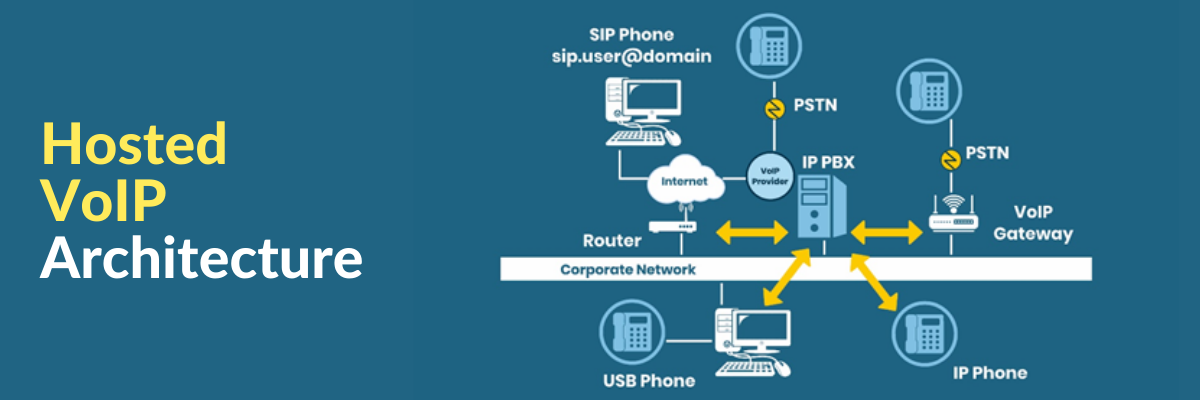
NETWORK ARCHITECTURE
VoIP Network Architecture
A professional VoIP deployment normally consists of several logical and physical network layers.
IP Phones
Physical SIP endpoints connected to the enterprise LAN and providing voice services to users.
Access Switches
Ethernet switches provide Layer 2 connectivity, VLAN segmentation, PoE and QoS classification.
Routers
Layer 3 devices provide inter-VLAN routing, WAN connectivity, routing policies and network path selection.
Firewall
Controls traffic between trusted internal networks and external networks or service providers.
SBC
Session Border Controllers provide SIP-aware security, topology hiding, NAT traversal, signaling normalization and media control.
SIP Provider
Provides external SIP connectivity, telephone numbering, inbound and outbound voice services.
LAYER 3
IP Addressing
Correct IP addressing and routing are fundamental to SIP signaling and RTP media transport.
IPv4
IPv4 remains the dominant addressing technology for enterprise VoIP deployments.
IPv6
IPv6 provides a substantially larger address space and can eliminate many traditional NAT requirements.
Private Networks
RFC 1918 address space is commonly used for internal voice networks.
Default Gateway
The default gateway provides Layer 3 connectivity between the voice network and external destinations.
DNS
DNS can be used for SIP service discovery, server resolution and general endpoint operation.
DHCP
DHCP can provide IP configuration, gateway, DNS and VoIP-specific provisioning information.
LAYER 2 SEGMENTATION
Voice VLAN
Voice VLANs logically separate IP telephony traffic from normal workstation and application traffic.
Voice VLAN
Dedicated VLAN for IP phones and other voice endpoints.
Data VLAN
User computers and normal application traffic can remain isolated from the voice network.
802.1Q
IEEE 802.1Q VLAN tagging allows multiple logical networks to share the same physical infrastructure.
Access Port
An access port can provide a workstation network while the connected IP phone operates in a dedicated voice VLAN.
LLDP / LLDP-MED
Network discovery protocols can provide endpoint and voice VLAN information to compatible IP phones.
VLAN Isolation
Logical separation reduces the broadcast domain and simplifies security and traffic policy.
POWER & NETWORKING
Power over Ethernet
PoE allows compatible IP phones to receive electrical power through the same Ethernet connection used for network communication.
IEEE 802.3af
Provides PoE for compatible network devices including many generations of IP phones.
IEEE 802.3at
PoE+ provides higher available power for devices requiring greater electrical capacity.
IEEE 802.3bt
Modern PoE standards provide substantially higher power budgets for advanced network devices.
PoE Budget
Switch selection must account for the total available PoE power and the combined consumption of connected devices.
QUALITY OF SERVICE
QoS for VoIP
Quality of Service is used to protect latency-sensitive voice traffic during periods of network congestion.
Classification
Traffic is identified according to protocol, VLAN, interface, DSCP value or other classification criteria.
Marking
Packets can be marked with DSCP or Layer 2 priority information to communicate their treatment requirements across the network.
Queuing
Priority queues allow latency-sensitive traffic to be transmitted before lower-priority traffic during congestion.
Scheduling
Network devices use scheduling algorithms to determine packet transmission order.
Policing
Traffic policing can enforce predefined bandwidth limits and discard or remark packets exceeding policy.
Shaping
Traffic shaping buffers packets and controls transmission rate to smooth bursts.
PACKET CLASSIFICATION
DSCP and Voice Traffic
Differentiated Services Code Point allows IP packets to be classified for preferential treatment within a QoS-enabled network.
EF — Expedited Forwarding
DSCP EF, commonly represented as decimal 46, is widely used for real-time voice RTP traffic.
Signaling Traffic
SIP signaling can receive a different QoS treatment from the actual RTP media stream.
Trust Boundary
The network should define where endpoint markings are trusted and where packets are reclassified.
End-to-End QoS
DSCP marking is useful only when intermediate network devices preserve and correctly process the markings.
NETWORK PERFORMANCE
Latency
Network latency represents the time required for packets to travel between endpoints. Excessive delay negatively affects natural conversation and interactive communication.
Propagation Delay
Delay caused by the physical distance and characteristics of the transmission medium.
Serialization Delay
Time required to place the packet onto the physical interface.
Processing Delay
Time required by routers, switches and other network devices to process packets.
Queuing Delay
Delay caused by packets waiting in network queues during congestion.
REAL-TIME MEDIA
Jitter
Jitter represents variation in packet arrival time. Unlike ordinary data traffic, real-time voice cannot indefinitely wait for missing packets without affecting the conversation.
Network Congestion
Variable queue depth can introduce significant packet arrival variation.
Jitter Buffer
IP phones and media platforms can temporarily buffer packets to smooth variations in arrival time.
Adaptive Buffer
Adaptive jitter buffers dynamically adjust buffering according to observed network conditions.
Excessive Jitter
High jitter can produce robotic, fragmented or intermittent audio.
RTP QUALITY
Packet Loss
Packet loss directly affects RTP media because lost voice packets cannot normally be retransmitted without introducing unacceptable delay.
Interface Errors
CRC errors, duplex problems and physical-layer faults can result in packet loss.
Congestion
Oversubscribed links can drop packets when queues become full.
Wireless Networks
Radio interference, signal degradation and roaming can introduce packet loss and jitter.
Provider Network
Packet loss can occur outside the local LAN and must therefore be measured across the complete path.
PACKET SIZE
MTU and Fragmentation
Maximum Transmission Unit defines the largest IP packet that can normally be transmitted over a network interface without fragmentation at that layer.
Ethernet MTU
Standard Ethernet commonly uses an IP MTU of 1500 bytes.
Path MTU
The usable packet size depends on the smallest MTU along the complete network path.
Fragmentation
Fragmentation can increase processing overhead and create additional failure conditions in poorly configured networks.
VPN Tunnels
GRE, IPsec, VXLAN and other tunneling technologies introduce additional encapsulation overhead.
LAYER 3 ROUTING
Routing for VoIP
SIP signaling and RTP media depend on deterministic Layer 3 reachability between endpoints and communication infrastructure.
Static Routing
Suitable for simple and predictable VoIP environments with limited network topology.
OSPF
Dynamic interior routing protocol suitable for enterprise and service provider environments.
BGP
Used for large-scale inter-domain routing and service-provider connectivity.
Policy Routing
Allows traffic forwarding decisions to be influenced by source, destination, interface or other policy criteria.
Route Asymmetry
Asymmetric paths can complicate troubleshooting and interact badly with stateful firewalls.
Default Route
The default route provides reachability to destinations not covered by more specific routing entries.
NETWORK TRANSLATION
NAT and VoIP
Network Address Translation is frequently used to provide Internet access to private networks, but SIP and RTP require special consideration because addressing information can exist inside application payloads.
Static NAT
Provides a predictable one-to-one translation between addresses.
PAT
Port Address Translation allows multiple private hosts to share a public address.
SIP NAT Traversal
SIP signaling and SDP may require explicit handling when endpoints operate behind NAT.
RTP NAT
Media streams require correct bidirectional UDP connectivity through the translated path.
NETWORK SECURITY
Firewall and VoIP
VoIP firewalls must distinguish between signaling and media requirements while maintaining a restrictive security posture.
SIP Signaling
Permit only the SIP transports and source networks required by the deployment.
RTP
The firewall must allow the required RTP UDP port range between trusted and authorized media endpoints.
Stateful Inspection
Stateful firewalls track connection state and can enforce policies based on established sessions.
ACL
Access Control Lists can restrict traffic according to source, destination, protocol and port.
Rate Limiting
Limiting abnormal SIP traffic can reduce exposure to scanning and automated abuse.
Logging
Firewall logs provide valuable information when diagnosing blocked SIP and RTP traffic.
FIREWALL FEATURES
SIP ALG
SIP ALG is designed to inspect and modify SIP traffic passing through a NAT gateway. In practice, implementations differ significantly between manufacturers.
SIP Inspection
The firewall analyzes SIP messages and may attempt to modify addresses and ports.
SDP Rewriting
ALG may rewrite SDP information to accommodate NAT.
Compatibility Problems
Incorrect SIP ALG behavior can produce registration failures, dropped calls and one-way audio.
Controlled Design
In enterprise VoIP networks, SIP traversal should be explicitly designed and tested rather than assumed to work automatically.
SESSION BORDER CONTROL
Session Border Controller
An SBC is a specialized network element positioned at the boundary between SIP domains. It provides control over signaling, media and security policies.
Topology Hiding
Internal SIP addresses and network structure can be hidden from external SIP peers.
NAT Traversal
The SBC can anchor signaling and media to provide controlled connectivity across network boundaries.
SIP Normalization
Different SIP implementations can be normalized to improve interoperability.
Security
SIP-aware access control, rate limiting and policy enforcement can be applied at the network boundary.
Media Anchoring
RTP streams can be terminated and re-originated through the SBC to provide deterministic media paths.
Interconnection
SBCs are widely used between enterprise PBX systems, carriers and SIP trunk providers.
NAME RESOLUTION
DNS and VoIP
DNS is an important component of modern communication infrastructure and can be used to locate SIP services and resolve hostnames.
A / AAAA
Resolve hostnames to IPv4 or IPv6 addresses.
SRV
DNS SRV records can identify the location and priority of services such as SIP servers.
NAPTR
NAPTR records can participate in service discovery mechanisms used by SIP and other protocols.
DNS Availability
Unreliable DNS can affect endpoint registration, service discovery and external connectivity.
TIME SYNCHRONIZATION
NTP and VoIP Infrastructure
Accurate time synchronization is important for network operations, logging, security certificates and correlation of SIP traces across multiple systems.
NTP
Network Time Protocol synchronizes system clocks with authoritative time sources.
Log Correlation
Consistent timestamps make it significantly easier to correlate events across phones, PBX systems, routers and firewalls.
TLS Certificates
Incorrect system time can cause certificate validation failures in TLS-based services.
Infrastructure Design
Network infrastructure should use reliable and redundant time sources where operational accuracy is required.
ENDPOINT PROVISIONING
DHCP for IP Phones
DHCP can provide much more than an IP address. Properly configured enterprise voice networks can use DHCP to automatically provide phones with network and provisioning information.
IP Address
Provides the endpoint with an address from the appropriate voice subnet.
Default Gateway
Provides Layer 3 connectivity outside the local subnet.
DNS Servers
Provides DNS resolver information required for hostname resolution.
NTP
Phones can receive time-server information through DHCP or other provisioning mechanisms.
Vendor Options
Many IP phone manufacturers support vendor-specific DHCP options for automatic provisioning.
Zero-Touch Deployment
Automated provisioning can simplify large-scale deployment of IP phones.
WIRELESS NETWORKS
VoIP over Wi-Fi
Voice over Wi-Fi requires significantly more attention to radio design than ordinary Internet access. Roaming, channel utilization, interference and RF coverage directly affect voice quality.
RF Coverage
Adequate signal coverage is required throughout the area where mobile voice devices operate.
Channel Utilization
High channel utilization can increase latency and packet loss.
Roaming
Fast and predictable roaming is important for mobile VoIP endpoints.
Interference
RF interference can produce packet retransmissions, jitter and degraded voice quality.
MONITORING
VoIP Network Monitoring
Monitoring should cover both network infrastructure and the actual voice service. Interface utilization alone is not sufficient to determine VoIP health.
SNMP
Provides infrastructure telemetry including interface utilization, errors, packet counters and device health.
NetFlow
Provides flow-level visibility into traffic sources, destinations, protocols and bandwidth usage.
Syslog
Centralized event logging allows network and security events to be correlated across infrastructure.
Packet Capture
Packet captures allow detailed inspection of SIP signaling, SDP negotiation and RTP streams.
MOS
Mean Opinion Score and related voice-quality metrics can be used to evaluate perceived call quality.
SLA Monitoring
Continuous monitoring can verify latency, availability, packet loss and service performance against defined operational targets.
TROUBLESHOOTING
VoIP Network Troubleshooting
Network troubleshooting should follow the communication path systematically from the endpoint to the remote service.
01 — Physical Layer
Check Ethernet link state, optical levels, CRC errors, duplex settings, cable condition and interface errors.
02 — VLAN
Verify that the endpoint is assigned to the correct voice VLAN and that VLAN tagging is consistent.
03 — DHCP
Verify address assignment, gateway, DNS, NTP and provisioning parameters.
04 — Routing
Confirm that the phone can reach the PBX, SIP registrar and required external networks.
05 — Firewall
Check ACLs, NAT rules, stateful inspection and SIP/RTP policy.
06 — SIP
Analyze REGISTER, INVITE and SIP response codes.
07 — SDP
Verify advertised IP addresses, media ports and codecs.
08 — RTP
Confirm that media packets are transmitted and received in both directions.
FIELD DIAGNOSTICS
Common VoIP Network Problems
Phone Cannot Register
Check DNS, routing, firewall policy, NAT, credentials and SIP server reachability.
One-Way Audio
Usually indicates an RTP path, NAT, firewall or SDP addressing problem.
No Audio
Verify RTP ports, SDP addresses, firewall rules and media routing.
Robotic Voice
Often associated with packet loss, jitter, congestion or excessive jitter-buffer operation.
Call Drops
Investigate SIP timers, NAT state expiration, firewall behavior, routing changes and provider signaling.
DTMF Does Not Work
Verify the configured DTMF method and confirm that both sides support the negotiated mechanism.
Poor Quality During Load
Inspect interface utilization, queue drops, QoS policy and upstream congestion.
Intermittent Registration
Investigate NAT timeout behavior, packet loss, DNS failures, SIP retransmissions and unstable WAN connectivity.
NETWORK SECURITY
VoIP Security Architecture
Voice infrastructure should be treated as a critical network service rather than as an ordinary endpoint application.
Network Segmentation
Isolate voice endpoints and communication servers from ordinary user networks where appropriate.
ACLs
Restrict communication between voice infrastructure and unauthorized networks.
SIP Rate Limiting
Limit abnormal signaling rates to reduce the impact of automated scanning and abuse.
Secure Management
Management interfaces should not be unnecessarily exposed to the public Internet.
TLS
SIP signaling can be protected using TLS where supported.
SRTP
Voice media can be protected using Secure RTP where supported by the endpoints and infrastructure.
NETWORK ENGINEERING
Recommended VoIP Network Design
Dedicated Voice VLAN
Separate voice traffic from normal workstation traffic using logical network segmentation.
End-to-End QoS
Classify, mark and prioritize voice traffic throughout the entire communication path.
Redundant Connectivity
Critical voice infrastructure should avoid unnecessary single points of network failure.
Controlled Internet Access
SIP services should be exposed only through explicitly defined security policies.
Monitoring
Network telemetry and voice-quality monitoring should be available before problems occur.
Documented Configuration
VLANs, IP addressing, routing, firewall rules, SIP endpoints and QoS policies should be documented.
SERVICENET
VoIP Networking by ServiceNet
ServiceNet provides communication infrastructure designed to integrate IP telephony with enterprise networks, SIP trunks, PBX systems, call centers and cloud communication platforms.
Our approach treats VoIP as a complete network service. SIP signaling, RTP media, IP routing, QoS, NAT, firewall policy and monitoring must be engineered together to provide predictable service quality.
SIP Connectivity
SIP trunk and VoIP connectivity for enterprise communication systems.
Network Integration
Integration of IP telephony with LAN, WAN, VLAN and Layer 3 network infrastructure.
QoS Engineering
Traffic classification, marking, prioritization and bandwidth management for real-time media.
NAT & Firewall
Technical configuration and troubleshooting of SIP/RTP connectivity across network boundaries.
Enterprise VoIP
Infrastructure for offices, distributed organizations and multi-site communication systems.
Technical Support
Assistance with network connectivity, SIP signaling, RTP media and interoperability issues.
VOIP.GE KNOWLEDGE BASE
Network Quality Defines Voice Quality
A reliable VoIP service cannot be separated from the network that carries it. SIP may establish the session, but the actual conversation depends on a stable and predictable RTP transport path.
Proper VLAN segmentation, deterministic routing, appropriate QoS policies, controlled NAT, correctly designed firewall rules and continuous monitoring form the foundation of a professional IP telephony environment.
When diagnosing a VoIP problem, the correct approach is to follow the complete path: Endpoint → Switch → VLAN → Router → Firewall → SIP Infrastructure → RTP Media → Remote Endpoint
ServiceNet provides SIP connectivity and technical infrastructure for business telephony, IP PBX systems, call centers and enterprise communication environments.
For technical consultation, use the contact options available on our website or call:
+995 322 485000
24/7 Technical Support